
Home/Products/Industrial & Specialty Resins/Vinyl Ester Resin
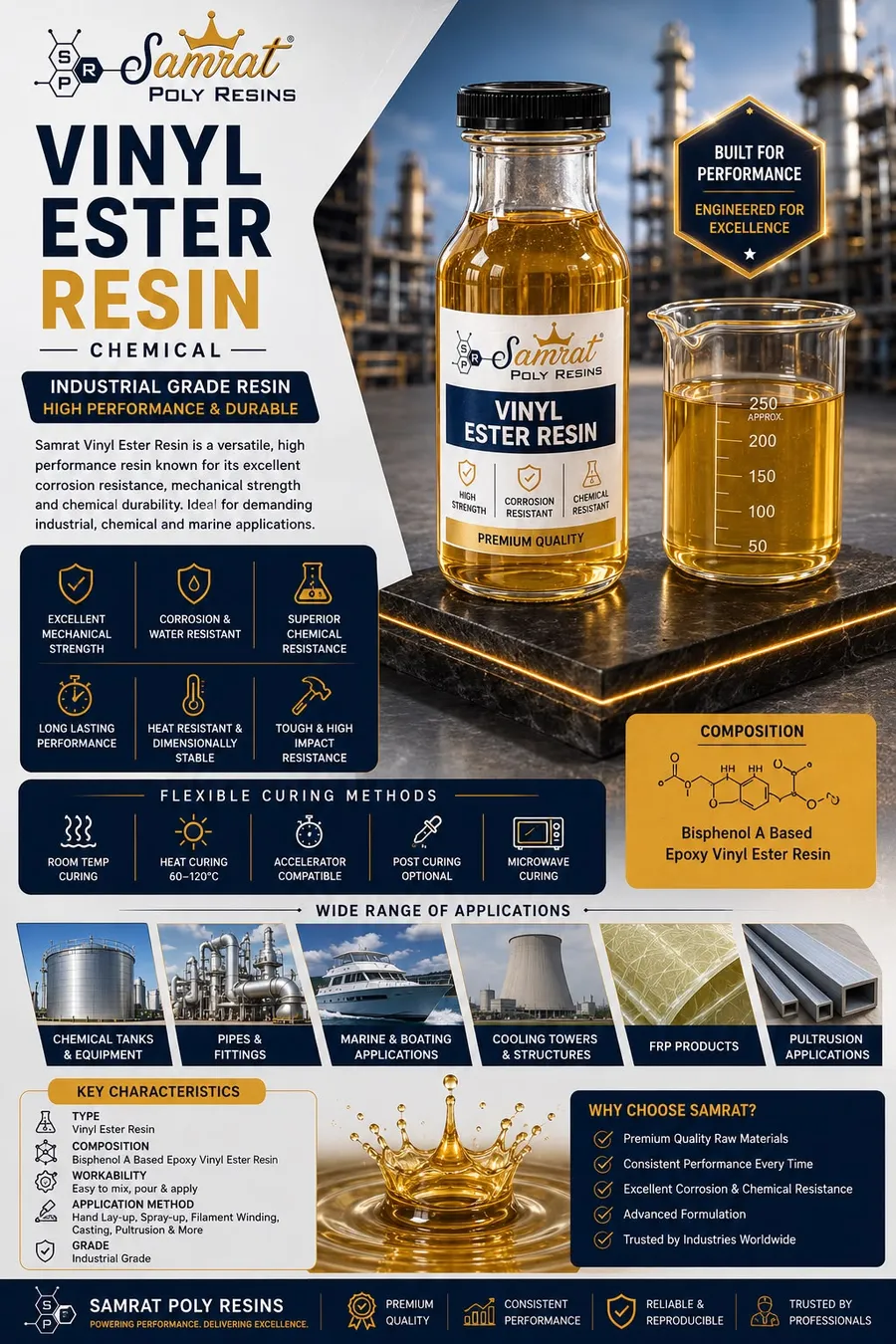
Vinyl Ester Resin — Bisphenol-A epoxy vinyl ester resin for chemical-resistant FRP; Samrat Poly Resins product graphic
Industrial & Specialty Resins

Vinyl Ester Resin

Industrial-grade Bisphenol-A epoxy vinyl ester resin for documented chemical- and corrosion-service FRP applications.

Samrat Poly Resins supplies Vinyl Ester Resin as the published industrial-grade Bisphenol-A epoxy vinyl ester route for FRP applications with a stated chemical- or corrosion-service requirement. Start with the finished component and actual service environment, then review the current TDS before selecting a system.

Price

Price on Request

Vinyl Ester Resin pricing varies based on:

  • Order Quantity
  • Finished FRP component, service medium and relevant technical requirement
  • Quantity, packaging, required documentation and delivery location
Request Vinyl Ester Resin Quote

Product details

GradeIndustrial Grade
Minimum Order Quantity225 kg
Packaging225 kg Drum
Shelf Life6 months
StorageBelow 25°C; cool, dry place away from direct sunlight

Technical specifications

Resin TypeBisphenol-A Epoxy Vinyl Ester
Viscosity350 cPs (at 25°C)
Gel Time15–20 minutes at 25°C (see TDS test condition)
Styrene Content40%
Catalyst / DosageMEKP at 1.5% — the dosage the published gel time is measured at
Specific Gravity / Density1.05 g/cm³
Thermal Data110°C (TDS typical data; not a stated service-temperature limit)
Flash Point32°C (closed cup)

Vinyl Ester Resin is Samrat Poly Resins' documented industrial-grade Bisphenol-A epoxy vinyl ester resin for industrial FRP applications where chemical and corrosion resistance is a stated product-selection requirement. The current Technical Data Sheet lists FRP tanks and chemical storage vessels; pipelines, ducts and scrubbers; cooling towers, pressure vessels and offshore structures; and marine, pultrusion and filament-winding applications. It describes resistance to water, acids, alkalis and solvents at a product-data level. This is not a chemical-compatibility chart, a finished-component approval or a recommendation for every service medium. Buyers should share the actual FRP component, service medium, concentration and operating temperature where relevant before selecting a resin system.

Vinyl Ester Resin is the resin or matrix component in an FRP system; Glass Fiber is the separate reinforcement decision. The TDS lists hand lay-up, spray-up, filament winding, casting and pultrusion as processing methods, but this product page does not provide operating instructions. For general FRP without a stated chemical- or corrosion-service requirement, review GP Clear Resin or Unsaturated Polyester Resin. Lamination Resin and GP Gelcoat Resin have separate lamination and mould-surface roles. Epoxy Clear Casting Resin is a separate two-component epoxy route for published decorative casting, not a substitute for this industrial FRP resin.

What is Samrat Vinyl Ester Resin?

The current Vinyl Ester Resin TDS identifies one industrial-grade, Bisphenol-A based epoxy vinyl ester product. It is the product route to review when a published FRP application has a chemical- or corrosion-service requirement, rather than a broad general-purpose, decorative-casting or surface-finish requirement.

The TDS describes resistance to water, acids, alkalis and solvents. It does not publish a chemical-compatibility chart, concentration limits, a finished-tank or finished-pipe approval, a fire rating, or a product-specific operating-temperature range. Treat the listed resin data as a starting point for selection, then confirm the actual component and service requirement before procurement.

Resin product data is not finished FRP performance

Published resin data

Review the current TDS for the listed resin type, viscosity, gel-time test value, density, storage, packaging and typical thermal data. These are product-data points, not a guarantee for every batch or end use.

Finished FRP system

A tank, duct, pipe or profile can depend on the resin, reinforcement, laminate construction, thickness, surface or corrosion-barrier system, cure state and tested configuration. The resin alone does not establish finished-component performance.

Separate reinforcement role

Glass Fiber is the reinforcement product. This page does not prescribe a mat weight, laminate schedule, resin-to-glass ratio or fabrication method for a particular application.

Choose the resin route by the documented requirement

These concise comparisons prevent an industrial chemical-service enquiry from being confused with a broad GP, isophthalic fire-retardant, conventional epoxy or separate Bisphenol Resin requirement.

Vinyl Ester Resin

Review this product when the TDS-listed industrial FRP application has a stated chemical- or corrosion-service requirement. Provide the actual medium, concentration and temperature where relevant.

UPR or GP Resin

Unsaturated Polyester Resin is the broader family, while GP Clear Resin is Samrat’s published general-purpose FRP route. Do not assume either is the same selection as this specialist Vinyl Ester grade.

Isophthalic / fire requirement

Samrat’s ISO Fire Retardant Resin is a separate isophthalic fire-retardant route. A project that names isophthalic chemistry or a fire requirement should be reviewed against the exact product data; this Vinyl Ester page does not establish either requirement.

Conventional epoxy system

Epoxy Clear Casting Resin is a separate two-component epoxy route for its published decorative-casting role. The documented “epoxy vinyl ester” chemistry here does not make the products interchangeable.

Separate Bisphenol Resin

Bisphenol Resin is a separately listed Samrat product with its own TDS. Treat it as a distinct product route and review the exact current documentation instead of using “Bisphenol” as a substitute name for Vinyl Ester Resin.

Fire-performance requirement

Vinyl Ester Resin is not presented here as a fire-retardant grade. If a project specifies a fire class, test method or rating, share it and review the separate Fire Retardant Resin route before selection.

Before ordering Vinyl Ester Resin

Share the finished FRP component, exact grade if known, service medium and concentration where relevant, operating temperature where relevant, any stated fire or technical requirement, expected quantity, packaging requirement, delivery location and required documentation. This supports a focused discussion without asking buyers to design a laminate or provide a formulation.

Key features

  • Documented industrial-grade Bisphenol-A epoxy vinyl ester chemistry
  • TDS lists chemical and corrosion resistance to water, acids, alkalis and solvents
  • Published 350 cPs viscosity at 25°C
  • TDS identifies low shrinkage on cure without publishing a percentage
  • Published for documented industrial FRP applications
  • Product-specific Technical Data Sheet available

Applications

  • FRP tanks and chemical storage vessels
  • Pipelines, ducts and scrubbers
  • Cooling towers, pressure vessels and offshore structures
  • Marine components, filament winding and pultrusion
Industries we serve

  • Chemical storage & processing
  • Cooling towers & industrial plants
  • Pipelines, ducts & scrubbers
  • Marine & industrial composite applications

Why choose Samrat Poly Resins

  • Published industrial-grade chemistry and technical data
  • Documented chemical- and corrosion-service application context
  • 225 kg drum packaging and 225 kg minimum order quantity
  • Product-specific TDS available for technical review
  • Clear separation from GP, fire-retardant and conventional epoxy product routes
  • Industrial enquiry route for the actual service requirement

Explore applications

See how Vinyl Ester Resin performs in specific FRP manufacturing applications.

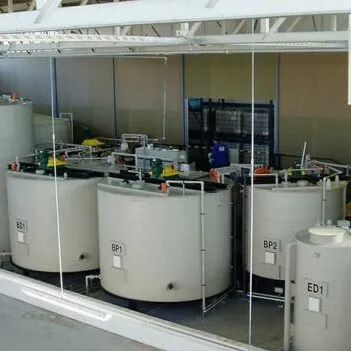
Industrial chemical storage and dosing tank skid with multiple vertical FRP tanks and piping

Vinyl Ester Resin for FRP Chemical Storage Tanks

A buyer-selection guide for the documented use of Vinyl Ester Resin in FRP chemical storage tanks and vessels. Confirm the actual service requirement before specifying a finished system.

✓ Selection support for documented FRP tank and vessel applications.

Recommended productVinyl Ester Resin
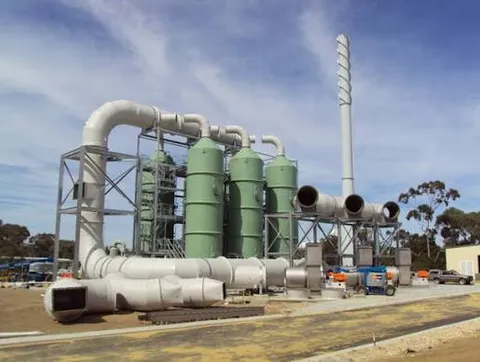
Industrial wet scrubber towers connected to FRP ductwork and an exhaust stack

Vinyl Ester Resin for FRP Pipelines, Ducts & Scrubbers

A buyer-selection guide for the TDS-listed use of Vinyl Ester Resin in FRP pipelines, ducts and scrubbers. Verify the real service requirement before selecting a finished system.

✓ Documented industrial FRP application guidance.

Recommended productVinyl Ester Resin
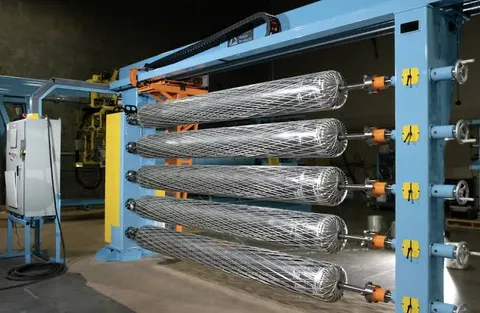
Multi-spindle filament winding machine with fibre-wound mandrels loaded on the rack

Vinyl Ester Resin for Filament Winding

A buyer-selection guide for the TDS-listed use of Vinyl Ester Resin in filament-winding processes. Confirm the complete process and finished-component requirements separately.

✓ Published product data for a documented process category.

Recommended productVinyl Ester Resin
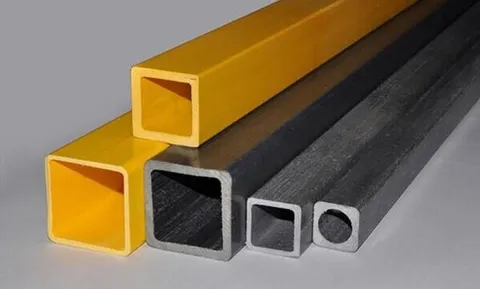
Pultruded FRP square and round profile stock in yellow fibreglass and black carbon fibre

Vinyl Ester Resin for Pultrusion

A buyer-selection guide for the TDS-listed use of Vinyl Ester Resin in pultrusion. Confirm process and finished-component requirements separately before ordering.

✓ Published product data for a documented process category.

Recommended productVinyl Ester Resin

Frequently asked questions

Samrat's current TDS identifies Vinyl Ester Resin as an industrial-grade Bisphenol-A based epoxy vinyl ester resin. It is published for industrial FRP applications where chemical and corrosion resistance is part of the material-selection discussion.

Samrat publishes Unsaturated Polyester Resin and GP Clear Resin as separate broad and general-purpose FRP routes. This product's TDS instead identifies a Bisphenol-A epoxy vinyl ester grade with a documented chemical- and corrosion-service context. Select by the actual component and service requirement, not by resin family name alone.

They are separately published material routes. Vinyl Ester Resin is the industrial FRP product described in its own TDS as Bisphenol-A epoxy vinyl ester. Epoxy Clear Casting Resin is a separate two-component epoxy product for published decorative casting. “Epoxy vinyl ester” does not mean this is a clear-casting or art epoxy substitute.

The current TDS describes resistance to water, acids, alkalis and solvents. It does not publish a chemical-compatibility chart, concentration limits, a service-temperature range or a finished-FRP approval. Share the actual medium, concentration, temperature and component requirement before selection.

The TDS identifies low shrinkage on cure but does not publish a shrinkage percentage or a mechanical-property table. It lists 110°C as typical thermal data without a stated test or cure condition, so it should not be treated as an operating-temperature limit for a finished part.

No fire-retardant rating, fire classification or fire-performance claim is published for this Vinyl Ester product. If a project has a fire requirement, review the separate Fire Retardant Resin route and share the project specification; do not assume a normal Vinyl Ester Resin establishes finished-system fire performance.

The TDS lists industrial FRP processing methods, and Glass Fiber is Samrat's separate reinforcement product route. Resin and reinforcement have different roles; the required reinforcement, laminate construction and finished-component requirement should be confirmed for the application rather than assumed from this page.

They are separate Samrat product routes with their own TDS documents. Do not treat “Bisphenol” as a synonym for this Vinyl Ester grade or assume interchangeability. Review the exact product TDS and intended application before choosing between Vinyl Ester Resin and Bisphenol Resin.

Share the finished FRP component, exact grade if known, service medium and concentration where relevant, operating temperature where relevant, any stated fire or technical requirement, expected quantity, packaging requirement, delivery location and required documentation. This supports grade selection without assuming a chemical-compatibility or finished-system approval.

Industrial FRP service resources

Vinyl Ester Resin buyer guides

Start with the published Bisphenol-A epoxy vinyl ester product route, then compare the separately published polyester, isophthalic and epoxy routes, define the actual service requirement, and review the current TDS before procurement.

What Is Vinyl Ester Resin?

Understand Samrat Poly Resins' published industrial-grade Bisphenol-A epoxy vinyl ester route for documented FRP chemical- and corrosion-service discussions.

3 min readRead Article →

Vinyl Ester Resin vs Isophthalic Resin

A cautious buyer comparison between Samrat's published Vinyl Ester route and an isophthalic-resin requirement where the exact product data still matters.

2 min readRead Article →

Vinyl Ester Resin vs Epoxy Resin

Separate Samrat's published epoxy vinyl ester route from its conventional epoxy resin products before selecting a material system for an industrial requirement.

2 min readRead Article →

Vinyl Ester Resin for Chemical-Service FRP: Buyer Guide

Use Samrat's published Vinyl Ester chemical- and corrosion-service position to prepare the right technical questions without assuming chemical compatibility.

2 min readRead Article →

Vinyl Ester Resin Technical Specifications Explained

A buyer-level explanation of the current Vinyl Ester TDS values, what they identify about the supplied resin, and what they do not prove about a finished FRP component.

2 min readRead Article →

Vinyl Ester Resin Procurement Checklist

Prepare a focused industrial Vinyl Ester Resin RFQ with the service, component, documentation and commercial details needed for an evidence-led discussion.

2 min readRead Article →

Unsaturated Polyester Resin vs Vinyl Ester Resin

A product-family comparison for buyers separating a standard UPR requirement from a project with stated chemical- or corrosion-resistance needs.

2 min readRead Article →

GP Resin vs Vinyl Ester Resin

Compare general-purpose GP polyester resin and vinyl ester resin when an FRP project has different process or chemical-resistance requirements.

2 min readRead Article →

Company context and grade verification

Verify the company, product route and published data

Enquiry

Request a Vinyl Ester Resin quote

Share the finished FRP component, exact grade if known, service medium and concentration where relevant, operating temperature where relevant, any stated fire or technical requirement, expected quantity, packaging need, delivery location and required documentation. This supports grade selection without implying chemical compatibility or finished-system approval.

How should we reply? (phone or email, at least one)
We only use these to answer this enquiry.

Your enquiry is delivered to our email inbox by Web3Forms, a form-delivery service. The page you sent it from and how you reached the site (for example a search or a link) are attached so we know what you were looking at. We use the details to reply to you and discuss your requirement. This form does not sign you up to any newsletter or mailing list.Privacy Policy