
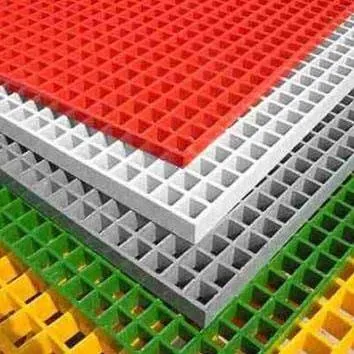
What this industry manufactures
Grating fabricators supply walkway and platform panels, stair treads and nosings, trench and drain covers, sump and pit covers, machine-surround decking and, where the system is pultruded, the bars and structural sections that go with them. The buyers are chemical and fertiliser plants, water and effluent treatment works, food and beverage plants, power stations, marine and offshore structures, and any site where a steel walkway would corrode or a spark-free, non-conductive floor is wanted.
What each part of the job asks of the resin
A grating is not a laminate in the usual sense — it is a solid, glass-dense section with an exposed top face. Those two facts drive everything.
- Moulded panel body
- Continuous roving is laid in alternating directions and flooded with resin. The resin has to penetrate a dense bundle and cure evenly through a section far thicker than a hand-laid laminate, without leaving dry roving or a soft core.
- Walking surface
- The top face takes foot traffic, trolley wheels, grit and cleaning. It is usually finished with a resin-rich coat, often with a mineral grit broadcast into it for slip resistance — a surfacing decision the fabricator makes, not a property of the resin.
- Cut edges and openings
- Panels are cut and drilled on site, which exposes glass. Edge sealing is part of the installation, and the resin used to seal should match the panel.
- Stair treads and nosings
- The same panel construction with a harder-worn surface and, usually, a contrasting nosing — a colour and surfacing decision taken with the pigment supplier.
- Pultruded bars and structural sections
- Pulled through a heated die rather than moulded, so they need a heat-cured pultrusion grade. The catalogue lists SPR 401 PT for continuous pultrusion and pultruded structural sections.
Where the resin actually matters in a grating
A moulded grating is mostly glass. The resin is what carries it, and the two jobs it has are wetting out that roving completely and curing through the section without shrinking away from it. That is a processing question first: viscosity decides how readily the resin penetrates the bundle, and the working window has to cover filling a whole panel rather than rolling out a laminate.
The second question is service. A grating in a dry warehouse and a grating over an acid drain are the same product with very different requirements. GP Clear Resin is the general-purpose orthophthalic grade, published for general FRP moulding work. ISO Polyester Resin is the isophthalic grade published for laminates facing water immersion, sustained damp service and chemical service, and it is the one in this group with published cured-resin data. Fire Retardant Resin is published for FRP panels and building components in fire-sensitive environments such as tunnels and infrastructure. Vinyl Ester Resin is the corrosion-service route.
What none of them can tell you is how much load a panel carries. Span, mesh size, bar depth, glass content and the moulding itself decide that, and it is established by testing the finished grating — not by the resin datasheet.
What a grating panel lives with
The service conditions, not the panel dimensions, are what change the resin recommendation.
- Spillage and wash-down
- Process spills, hose-down water and cleaning chemicals sit on the top face and run through the mesh. What is spilled, how concentrated and how often decides whether a general-purpose grade is enough.
- Standing water and humidity
- Trench covers, effluent plants and wash bays keep the panel wet. That is the service the isophthalic family is published for.
- Sunlight
- Outdoor walkways and offshore decking weather on the top face. Pigment, surfacing and cure quality all matter alongside the resin.
- Traffic and abrasion
- Boots, trolleys and dropped tools work on the resin-rich surface and any grit in it.
- Temperature
- Hot plant areas, steam lines and outdoor heat. No service-temperature limit is published for these grades, so the working temperature belongs in the enquiry.
- Fire-sensitive locations
- Tunnels, enclosed plant rooms and transport infrastructure may carry a fire requirement for the walkway, which is a specification question before it is a resin question.
Required resin characteristics
- 01Wet-out of a dense continuous-roving bundle, without dry fibre inside the panel
- 02A working window long enough to fill a full panel at shop temperature
- 03Even cure through a thick, glass-dense section
- 04A resin-rich top surface that takes traffic, grit and cleaning
- 05Chemistry matched to what is spilled, stood in or washed down on the panel
- 06Batch-to-batch consistency, so panel after panel comes out of the same mould the same
Grade selection for grating work
Published typical values, each from the product named in its column. They describe the liquid resin at its reference condition — none of them describes a finished grating panel, whose load and fire behaviour come from testing the panel itself.
| GP Clear Resin | ISO Polyester Resin | Fire Retardant Resin | Vinyl Ester Resin | |
|---|---|---|---|---|
| Chemistry | Orthophthalic, Unsaturated Polyester | Isophthalic Unsaturated Polyester Resin | Unsaturated polyester, halogenated fire-retardant formulation | Bisphenol-A Epoxy Vinyl Ester |
| Viscosity (typical) | 350–450 cPs | 500 cPs (mPa·s) at 25 °C | 400 cPs | 350 cPs (at 25°C) |
| Gel time (typical) | < 8 minutes | 15 minutes at 25 °C | 5.5 minutes | 15–20 minutes at 25°C |
| Styrene content (typical) | 33–40% | 40% by weight | 35% | 40% |
| Cured-resin data published | No — liquid-resin values only | Yes — including 90 °C heat deflection temperature and 75 MPa tensile strength | No — liquid-resin values only | Thermal data 110°C published as typical, not as a service limit |
| Published role this maps to | General-purpose composite and FRP products | Chemical service FRP and laminates facing water immersion | FRP panels and building components in fire-sensitive environments | FRP tanks, pipelines and corrosion-service equipment |
Values are typical, from each product's own technical data sheet. A fire-retardant formulation is not a fire rating: no classification is published for any grade here, and a classification belongs to a tested construction. Load and span ratings belong to the finished, tested grating panel.
View GP Clear ResinView ISO Polyester ResinView Fire Retardant ResinView Vinyl Ester Resin
Manufacturing process
Moulded gratings are produced in an open steel or FRP mould with square cavities: continuous roving is laid across the mould in alternating directions and flooded with resin catalysed by MEKP and accelerated with cobalt octoate, each added to the resin separately, until the bars are solid. The panel is cured at ambient temperature, demoulded, trimmed and finished on its top face. Pultruded gratings take the other route — roving and mat pulled through a heated die as continuous bars, then assembled into panels — and that process needs the heat-cured SPR 401 PT rather than an ambient-cure laminating grade.
Points worth settling on the shop floor
- Panel thickness and glass loading are the fabricator’s design. Establish resin demand and cure behaviour on the real mould before costing a production run.
- A thick, glass-dense section holds its own cure heat. Trial the full panel, not a sample, and watch the cure through the section.
- Anti-slip surfacing is a choice made with the grit and pigment supplier; the resin only has to hold it.
- Never mix a concentrated peroxide initiator directly with a cobalt accelerator. Each goes into the resin on its own.
- The grating moulds are their own project: the catalogue lists SPR 401 TL for composite mould and tooling work.
Surface, colour and grit
The top face is the part of a grating anyone ever touches. It is normally finished with a resin-rich coat, pigmented to the safety colour the site wants, and often carries a broadcast mineral grit for slip resistance. Colour comes from FRP polyester pigment dosed into the resin; the grit and how it is applied are the fabricator's process.
Where the specification asks for a moulded gloss surface rather than a gritted one — machine surrounds, covers, trims — GP Gelcoat Resin is the general-purpose surface coat and ISO Gelcoat the isophthalic one for surfaces that must hold gloss and colour through weathering and water contact.
Common products produced
- Moulded FRP walkway and platform grating panels
- Pultruded grating and structural bars
- Stair treads and nosings
- Trench, drain and sump covers
- Machine-surround decking and access covers
Questions to answer before you choose a grade
The first three decide the resin; the rest decide the quotation.
- 01Moulded or pultruded — because that alone changes the grade and the cure system
- 02What gets spilled, washed down or stood on the panel, at what concentration and temperature
- 03Is the walkway in a fire-sensitive location with a stated fire requirement?
- 04Indoor or outdoor, and what colour and surface does the site want?
- 05Panel size, mesh and bar depth — the fabricator's design, needed to estimate resin demand
- 06What load testing the finished panel has to pass, and who performs it
- 07Volumes, packaging and delivery location for the quotation
When to consider a different resin
Pultrusion Grade Resin (SPR 401 PT)
For pultruded grating bars and structural sections: a heat-activated cure in the die, with 0% production MEKP and cobalt.
Vinyl Ester Resin (SPR 501 VE)
Where the spillage is aggressive enough that an isophthalic polyester is not the right answer, or where the specification names vinyl ester.
ISO Fire Retardant Resin
A halogen-free, ATH-filled isophthalic fire-retardant grade, where the specification restricts halogenated flame retardants.
Tooling Grade Resin (SPR 401 TL)
Not for the grating — for the moulds it is pulled from, which face a heat cycle with every panel.
Frequently asked questions
Moulded gratings are made with an ambient-cure unsaturated polyester — a general-purpose orthophthalic grade for ordinary service, or an isophthalic grade where the panel faces water or chemicals. Pultruded gratings need a heat-cured pultrusion grade instead. Samrat Poly Resins supplies all three routes; the service conditions decide which to trial.
A moulded panel is flooded with resin in an open mould and cured at ambient temperature, so the resin needs wet-out and a working window long enough to fill the panel. A pultruded bar is cured in seconds inside a heated die, which needs a heat-activated peroxide system — the catalogue lists SPR 401 PT for that.
No, and no resin supplier honestly can. Load and span ratings are properties of the finished panel — its mesh, bar depth, glass content and moulding — and are established by testing that panel. The resin data describes the liquid resin at its reference condition.
Fire Retardant Resin and ISO Fire Retardant Resin are fire-retardant formulations, published for FRP panels and fire-sensitive environments. Neither carries a published fire classification: a classification applies to a tested construction of a stated build. Share the standard the walkway must meet and it can be discussed against that test.
Start from what is actually spilled and how concentrated it is. ISO Polyester Resin is published for chemical-service laminates and water immersion; where the medium is more aggressive, or the specification names it, Vinyl Ester Resin is the route. No chemical-resistance chart is published for any of these grades, so the service should be shared for review.
Usually by broadcasting a mineral grit into a resin-rich top coat while it is still wet. The grit type, size and how it is applied are the fabricator's process; the resin's part is to hold it and cure hard under traffic.
Colour is pigmented into the resin — FRP polyester pigment is supplied for that. Safety colours are common; the exact shade, and how consistent it stays outdoors, should be trialled on a real panel before a production run.
Manufacturer context
Manufacturing and quality information
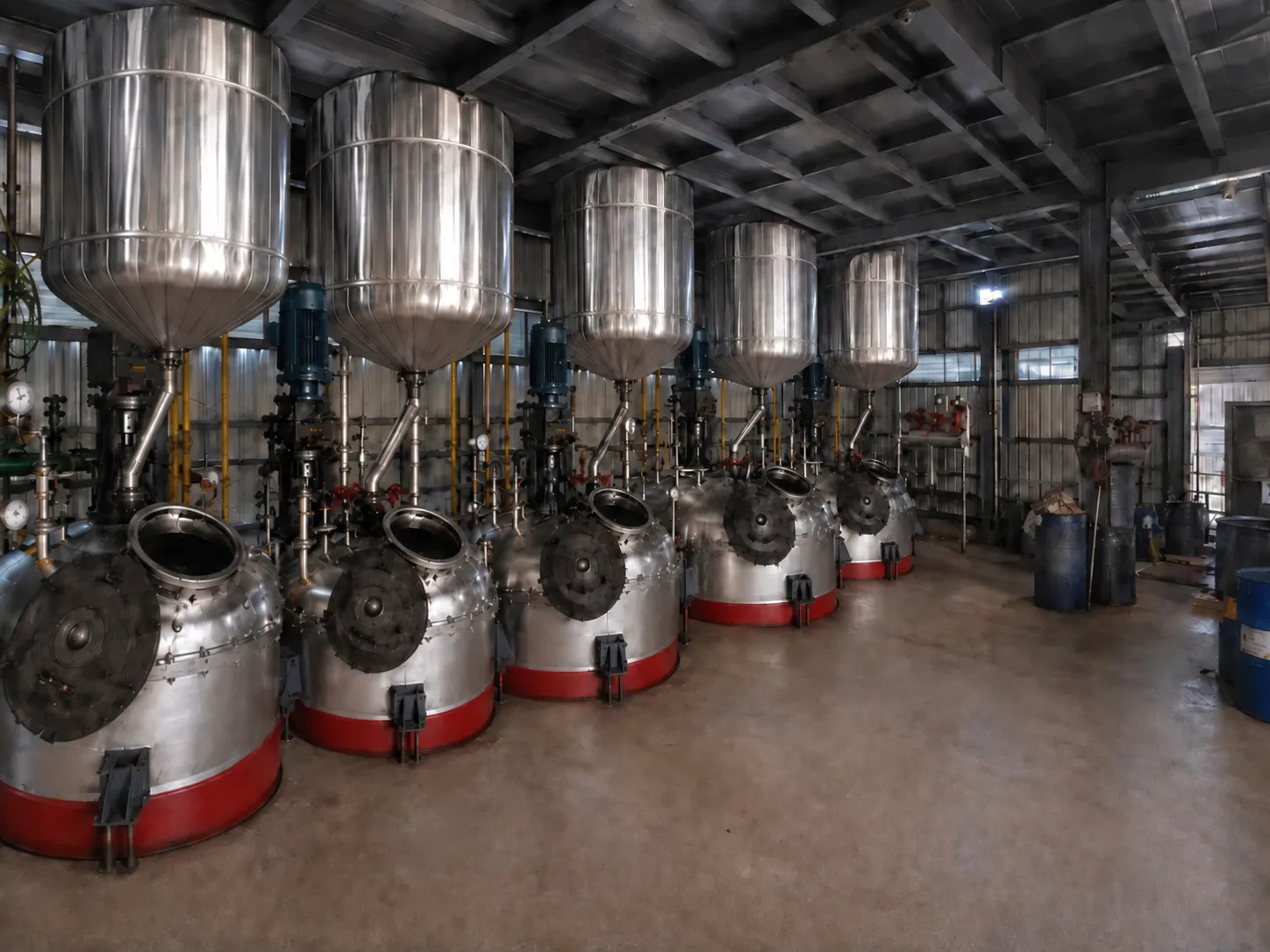 Manufactured at Doraha, PunjabThe grades on this page are produced at Samrat Poly Resins’ own plant; the company page describes the facility and its background.
 Batch checks before despatchOur company information describes the checks for viscosity, gel time and cure behaviour made before a batch is approved.
Discuss resin for your grating production
Tell us whether the panels are moulded or pultruded, what the walkway faces in service, and the panel sizes you run. The technical team will suggest a grade to trial and quote it in bulk.