
What this industry manufactures
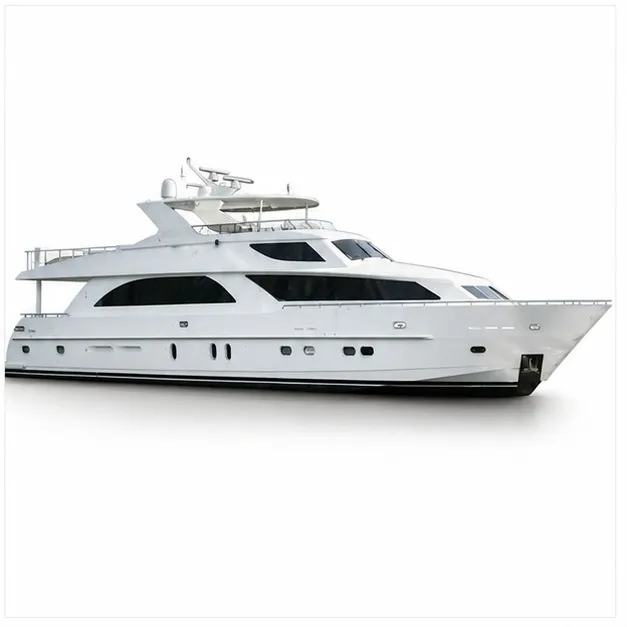
Marine fabricators build hulls, decks, cabin structures and a wide range of smaller FRP components — hatches, consoles, seating, fuel tank housings and fittings — for boats ranging from small fishing craft to mid-size recreational vessels, as well as marine components used outside boats entirely, such as FRP tanks and enclosures for waterfront and coastal installations.
Why GP Clear Resin is suitable
Marine lamination puts a premium on wet-out quality, since a hull or deck depends on complete resin penetration through every layer of reinforcement to reach its rated strength — any dry glass fibre becomes a weak point under load or impact. GP Clear Resin's 350–450 cPs viscosity wets out chopped strand mat and woven roving thoroughly during hand lay-up, and its cured mechanical strength supports the structural demands of hull and deck laminates. For components with prolonged direct seawater immersion or where maximum corrosion resistance is a priority, some builders step up to a vinyl ester resin — GP Clear Resin remains a dependable, cost-effective choice for general marine and boat component fabrication.
Required resin characteristics
- 01Thorough wet-out through multiple layers of glass reinforcement for full laminate strength
- 02Good mechanical strength and impact resistance for hulls, decks and structural components
- 03A workable gel time for building up multi-layer hull and deck laminates in stages
- 04Reliable room-temperature cure suited to open-mould boat building processes
- 05Consistent batch quality across the many resin-and-reinforcement passes a hull requires
Manufacturing process
Hulls and decks are typically built by hand lay-up in an open mould: a gelcoat layer is applied first for the finished exterior surface, followed by chopped strand mat and woven roving wet out with resin catalysed by an MEKP hardener and cobalt octoate accelerator, built up layer by layer to the specified hull thickness. Each layer is rolled to remove trapped air before the next is added. Once fully cured at room temperature, the hull or component is released from the mould, trimmed, and finished for fitting out.
Advantages
- Thorough wet-out supports full laminate strength through multi-layer hull construction
- Non-accelerated cure system gives builders control over gel timing across a multi-stage lay-up
- 225 kg drum packaging suits the substantial resin volumes hull and deck lamination requires
- Consistent 99% purity helps maintain uniform laminate quality across a large hull surface
Common products produced
- FRP boat hulls and decks
- Cabin structures and consoles
- Hatches, seating and fuel tank housings
- Marine fittings and waterfront FRP components
Frequently asked questions
GP Clear Resin is a general-purpose orthophthalic resin suitable for standard hull and marine component fabrication. For components with prolonged direct seawater immersion or where maximum corrosion resistance is the priority, a vinyl ester resin is often the preferred upgrade.
Hulls typically combine E-glass chopped strand mat with woven roving for added structural strength, built up in multiple layers to reach the required hull thickness.
Most boat builders apply a gelcoat layer first for a finished, protective exterior surface, then laminate GP Clear Resin and reinforcement behind it to build structural thickness.
It is cured at room temperature with an MEKP catalyst (around 1.5%) and a cobalt octoate accelerator (around 0.4%), with dosage adjusted to give enough working time for multi-layer hull lay-up.
Yes. It suits both — fabricators adjust laminate thickness and reinforcement to match the structural demands of the specific component, from small fittings to full hull structures.
Need resin for your boat or marine component production?
Get a bulk quote or talk to our technical team about the right grade and dosage for your marine lamination line.