
What this industry manufactures
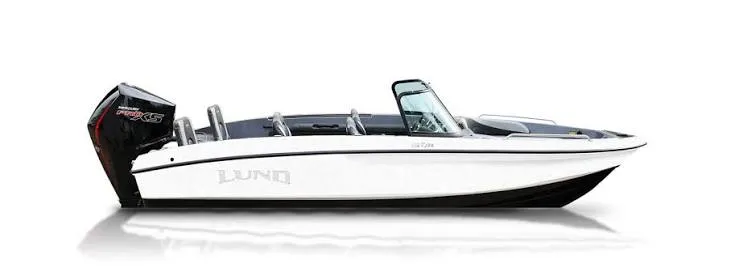
Marine gelcoat finishes the outer surface of FRP boat hulls, decks, cabin structures and other exterior marine components — the smooth, glossy, coloured skin visible on a finished boat, applied to the mould before the structural laminate is built up behind it.
Why GP Gelcoat Resin is suitable
GP Gelcoat Resin is thixotropic and much thicker (around 11,000 cPs) than a laminating resin, which is exactly what a curved, often vertical hull mould needs — it clings to the mould face without sagging or running while it gels. It is not the structural material of the hull: once it has gelled, glass fibre reinforcement wet out with GP Clear Resin is built up behind it to form the actual structural laminate that gives the hull its strength. For hulls that stay in the water continuously, some builders step up to a Vinyl Ester Resin laminate behind the gelcoat instead of GP Clear Resin, since vinyl ester offers meaningfully better resistance to the osmotic blistering that continuous immersion can cause — this is a laminate-side decision, not a change to the gelcoat itself. On the gelcoat side there is a parallel choice: Samrat publishes an ISO Gelcoat alongside the general-purpose grade, and an isophthalic gelcoat is what is normally specified where the visible surface has to hold gloss and colour through weathering and water contact. The gelcoat hub sets the two side by side, including the limits that apply to both — no polyester gelcoat is waterproof, and a hull bottom in continuous immersion steps up to a different grade again.
Required resin characteristics
- 01Thixotropic body that clings to curved, vertical hull mould surfaces without sagging
- 02High gloss, smooth cured finish straight off the mould face
- 03Compatible with spray or brush application over large hull areas
- 04Pigmentable for coloured hulls rather than plain white only
- 05Room-temperature MEKP cure matching standard hand lay-up workflows
Manufacturing process
A wax release agent is applied to the open hull mould first, then GP Gelcoat Resin, catalysed with an MEKP hardener and cobalt octoate accelerator, is sprayed or brushed on and left to gel. Once gelled, a layer of glass fibre wet out with GP Clear Resin is applied directly behind it, followed by the remaining structural laminate layers to build up the full hull thickness. Once fully cured, the hull is released from the mould with the gelcoat now forming its finished, visible outer surface — no additional surface finishing is needed.
Advantages
- Glossy, ready-to-use hull finish straight from the mould, without post-finishing
- Thixotropic body suited to large, curved hull surfaces without special equipment
- Pigmentable for coloured hulls in a single application step
- Standard MEKP/cobalt cure keeps the process consistent with the rest of the hand lay-up workflow
Common products produced
- FRP boat hulls and decks
- Cabin structures and marine component exteriors
- Coloured or white gelcoated hull surfaces
Frequently asked questions
No. It is the outer cosmetic and protective skin, applied to the mould first. The structural laminate that gives the hull its strength is built up behind the gelcoat, typically using GP Clear Resin reinforced with glass fibre.
Applying it first, against the smooth mould face, is what gives the finished hull its glossy, ready-to-use surface once demoulded — the gelcoat cures against the mould, and the structural laminate is built up on top of it afterwards.
Yes. GP Gelcoat Resin is supplied plain white, but FRP Polyester Pigment can be blended in before catalysing to produce a coloured hull finish.
Its TDS lists UV resistance as High, but it names no stabiliser system and publishes no weathering test (method, hours, colour change or gloss retention). For a hull expected to hold gloss and colour outdoors for years, compare ISO Gelcoat, whose TDS publishes a 1,000-hour xenon-arc result, and state the exposure when you enquire.
For hulls in continuous water immersion, a Vinyl Ester Resin laminate behind the gelcoat offers meaningfully better resistance to osmotic blistering than a standard polyester laminate. This changes the laminate behind the gelcoat, not the gelcoat layer itself.
Need gelcoat for your boat or marine hull production?
Get a bulk quote or talk to our technical team about the right gelcoat and laminate combination for your hull.