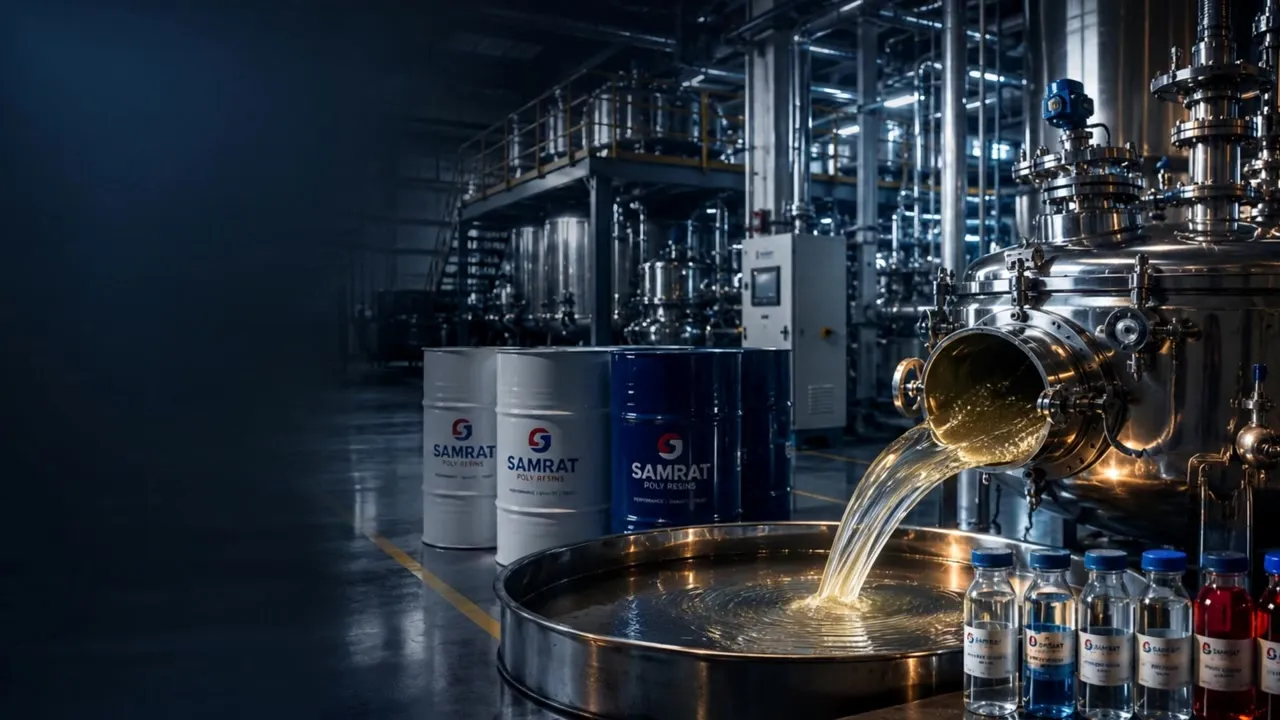


What this industry manufactures
This casting process underlies most of what Epoxy Clear Casting Resin is used for — river tables and wood-resin furniture, jewellery and small decorative castings, art pieces and craft work — rather than being tied to one specific end product. Anyone working with this resin, regardless of the final piece, follows broadly the same mixing, pouring and finishing sequence.
Why Clear Casting Resin is suitable
Epoxy Clear Casting Resin's 2:1 mix ratio by weight is the starting point for every stage of this process: because it's measured by weight rather than volume or drops, an accurate scale is a genuine requirement, not an optional nicety — getting the ratio wrong on a two-part epoxy risks a casting that stays tacky or never reaches full hardness. Its 900 cPs viscosity and 40-minute pot life give a working window that suits careful mixing and degassing without the resin gelling before pouring is finished, and its 30 mm maximum casting depth per pour is the single figure that determines whether a project needs one pour or several staged ones.
Required resin characteristics
- 01Accurate 2:1 weight-based measurement, not volume-based
- 02A pot life long enough to mix, degas and pour before the resin begins to set
- 03A viscosity workable for both careful pouring and detail work
- 04A dependable initial cure schedule for de-moulding and staged pours
- 05A predictable full cure schedule before sanding or finishing begins
Manufacturing process
Mixing starts with a scale, not a measuring cup: Epoxy Clear Casting Resin is weighed out at a 2:1 ratio with Epoxy Hardener — for example, 200g resin to 100g hardener — since weight-based measurement is significantly more accurate than volume for a two-part system. The two are stirred together thoroughly, typically for at least two to three minutes, scraping the sides and bottom of the mixing container to avoid unmixed streaks that can leave soft, uncured patches in the finished piece. Once mixed, the resin has around 40 minutes of pot life before it begins to thicken and gel, so pouring should follow promptly. It is poured slowly, ideally from a slight height rather than dumped in, which limits the amount of air introduced by the pour itself. Surface bubbles that do form are released with a heat gun or small torch passed briefly over the fresh pour — moving quickly and not lingering in one spot, since excess heat can scorch the surface rather than simply releasing air. For anything deeper than the 30 mm maximum per pour, the resin is poured in stages: one layer poured, left to reach its initial cure at around the 24-hour mark, then the next layer poured on top, repeating until the full depth is reached. Once the final layer reaches full cure at around 72 hours, the piece is released from its mould, and any mould-line seams or surface haze from sanding are wet-sanded through progressively finer grits and buffed back to the resin's natural high-gloss finish.
Advantages
- 2:1 weight-based mixing is straightforward with a basic digital scale
- 40-minute pot life supports careful mixing and degassing without rushing
- Staged pours at up to 30 mm each keep exotherm heat manageable on deeper projects
- Wet-sanding and buffing restore full gloss after any surface work
Common products produced
- River tables and wood-resin furniture
- Jewellery and small decorative castings
- General art and craft casting projects
- Any project needing correctly mixed, degassed and finished epoxy castings
Frequently asked questions
A 2:1 weight ratio is significantly more accurate than measuring by volume for a two-part epoxy system. Small errors in ratio can leave a casting under- or over-catalysed, which shows up as a soft, tacky surface or a casting that never reaches full hardness — a basic digital scale is the standard tool for this, not a measuring cup.
Mixing and pouring take minutes, but curing is measured in days: Epoxy Clear Casting Resin reaches an initial, de-mouldable cure at around 24 hours and a full cure at around 72 hours. Staged pours add their own 24-hour wait between each layer.
30 mm per pour. Anything deeper — most river tables, for example — is built up in successive stages rather than poured all at once, which keeps the exothermic heat generated during cure manageable and avoids cracking risk.
Pour slowly rather than dumping resin in, then pass a heat gun or small torch briefly over the fresh pour to release surface bubbles. Moving quickly rather than lingering in one spot avoids scorching the surface.
Once fully cured, at around 72 hours, the piece is released from its mould and any surface imperfections or mould-line seams are wet-sanded through progressively finer grits, then buffed back to the resin's natural high-gloss finish.
Yes — the mixing, pot life and cure schedule are the same regardless of scale. See our dedicated guides for river tables and wood-resin furniture and jewellery and small decorative casting for how the process applies to each.
Yes, in most respects — Epoxy Art Resin uses the same 2:1 mixing and a similar cure schedule. The main difference is technique emphasis: Epoxy Art Resin is formulated for self-levelling flatness on open horizontal surfaces, so its pours favour spreading evenly rather than staging for depth.
Need help planning your epoxy casting project?
Get a bulk quote for Epoxy Clear Casting Resin, or talk to our technical team about mixing ratios, staged pours and cure scheduling for your specific project.