
What this industry manufactures
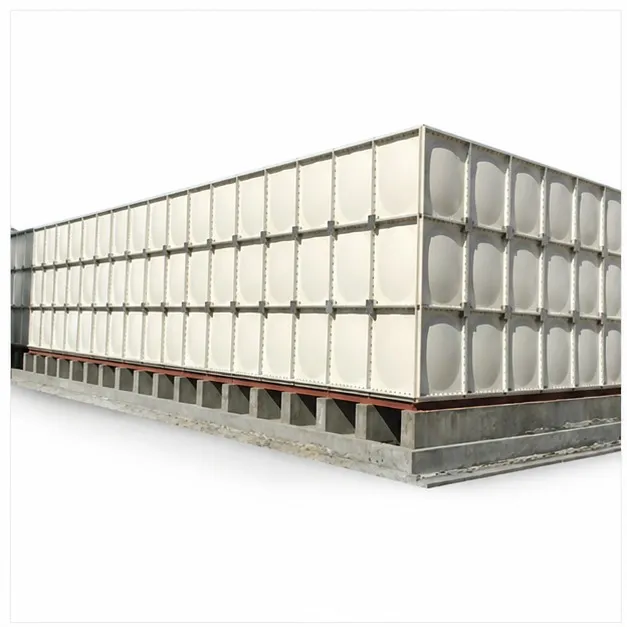
Water tank manufacturers produce sectional panel tanks (bolted together on site from moulded FRP panels), one-piece cylindrical or rectangular tanks, underground and overhead storage tanks, and process tanks for industrial water storage. Capacities range from a few hundred litres for domestic use to hundreds of thousands of litres for institutional and industrial storage.
Why GP Clear Resin is suitable
GP Clear Resin is Samrat Poly Resins' general-purpose orthophthalic unsaturated polyester resin — the same broad category of resin used across the FRP tank industry. Its clear, low-viscosity liquid form wets out chopped strand mat and woven roving quickly during hand lay-up, so laminators can build up tank walls in multiple passes without the resin dragging or leaving dry patches. Because it cures into a hard, chemically resistant laminate once catalysed, it forms the structural shell that gives an FRP tank its strength and its resistance to the water it holds. Working time and viscosity are the two properties that decide which grade suits a given tank size and lay-up, and both are published across the GP range.
Required resin characteristics
- 01Low viscosity for fast, even wet-out of glass reinforcement across large tank surfaces
- 02A workable gel time that gives fabricators time to lay up multiple reinforcement layers before the resin sets
- 03Good mechanical strength once cured, to withstand the hydrostatic pressure of a full tank
- 04Reliable, room-temperature cure so tanks can be fabricated without special curing equipment
- 05Consistent batch-to-batch quality, since tank walls are built up in several resin-and-reinforcement passes that all need to bond and cure alike
Manufacturing process
Tank panels or shells are typically built by hand lay-up: reinforcement (chopped strand mat, and often woven roving for added strength) is placed against the mould, and resin — catalysed with an MEKP hardener and a cobalt octoate accelerator — is worked into the reinforcement by roller or brush. Multiple layers are built up to reach the specified wall thickness, with each layer wetted out before the next is added. Once the full laminate has gelled and cured at room temperature, the panel or shell is released from the mould, trimmed, and — for sectional tanks — bolted together with the other panels on site to form the complete tank.
Advantages
- Fast gel time (under 8 minutes) keeps production cycles efficient without sacrificing lay-up time
- Non-accelerated cure system lets fabricators adjust MEKP and cobalt octoate dosage to suit workshop temperature and batch size
- 225 kg drum packaging suits continuous production runs for tank manufacturers working at volume
- Consistent 99% purity and controlled viscosity reduce the risk of dry patches or resin-rich areas that weaken a tank wall
Common products produced
- Sectional panel water tanks
- One-piece cylindrical and rectangular storage tanks
- Underground and overhead water tanks
- Industrial process water and raw-water storage tanks
Frequently asked questions
GP Clear Resin is a general-purpose orthophthalic resin suited to the structural laminate of FRP tanks. For tanks intended to hold potable water, always confirm the complete tank construction — including any food-grade gelcoat or lining used on the water-contact surface — meets the relevant drinking-water standards for your project.
Tank walls are typically built up with chopped strand mat, often combined with woven roving for additional strength in larger tanks. Samrat Poly Resins supplies E-glass chopped strand mat reinforcement alongside its resin range.
It is cured at room temperature with an MEKP catalyst and a cobalt octoate accelerator, the same non-accelerated system used across Samrat Poly Resins' general-purpose grades. Dosage is adjusted to suit workshop temperature and the gel time required for a given panel size.
GP Clear Resin is formulated for general-purpose FRP work, including standard water storage. For tanks holding aggressive chemicals or requiring higher corrosion resistance, a vinyl ester resin system is generally the more suitable choice.
It is used across the size range typical of FRP tank fabrication, from small domestic sectional tanks through to large industrial storage tanks — wall thickness and reinforcement layers are adjusted by the fabricator to suit the required capacity and structural load.
Need resin for your water tank production?
Get a bulk quote or talk to our technical team about the right grade and dosage for your tank fabrication line.